












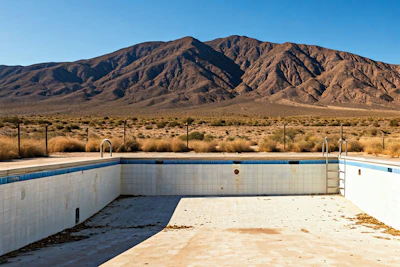
Water scarcity is no longer a future prediction — it is an accelerating national crisis with direct implications for the aquatics industry. More than 40 states expect water shortages in the next decade, driven by prolonged drought cycles, rising populations, stressed infrastructure, and unprecedented increases in utility costs. In this climate, commercial and residential swimming pools are becoming highly visible and increasingly scrutinized water users.
Pools require significant volumes for filling, backwashing, evaporation replacement, splash-out, leaks, and ongoing maintenance. As water systems struggle to keep up with demand, pools are shifting from community amenities to potential regulatory targets.
If we do not address water consumption internally, regulators will do it for us — and when regulation arrives, the industry will have little voice in shaping it.
WHAT'S ALREADY HAPPENING
There are three trends we are currently tracking.
Regulatory tightening has begun across the country. For example, Florida Statute Chapter 514 already requires public pools to disclose the amount and source of their water supply during permitting — an early form of usage oversight. Additionally, municipalities across the U.S. are requiring discharge permits and dedicate sewer connections for pool drainage, signaling increased regulatory interest in water waste and environmental impact.
Drought-driven pool restrictions are becoming normal. During water emergencies in California, Nevada, Arizona, Colorado, and parts of Texas, authorities have issued temporary restrictions on draining and refilling pools, topping off pools beyond essential levels, and filling new pools during drought declarations. These “temporary” measures preview what permanent policies may look like if the industry fails to self-regulate.
Infrastructure stress is driving rate hikes. Utilities nationwide are imposing higher water and sewer rates for large-volume users, consumption- based surcharges, and tiered pricing structures that penalize high or “non-essential” water use. Commercial and residential pools fall squarely into these categories — and rising costs are just the beginning.
Together, these three trends indicate a clear trajectory: increased oversight, higher operational costs, and potential consumption limits for aquatic facilities if conservation does not improve.
OPPORTUNITIES FOR CONVERSATION
The aquatics industry has proven strategies to dramatically reduce water waste without compromising safety or guest experience. What we lack is universal adoption — and that is what regulators are watching.
There are technology solutions that can already be implemented: automation and monitoring such as automated ORP/pH controllers that stabilize water chemistry and reduce unnecessary dilution and remote monitoring platforms that track water consumption and flag unexpected spikes or leaks; efficient filtration and backwash reduction like regenerative media filters that cut backwash water use by up to 90%, flow meters and pressure differential indicators that eliminate unnecessary backwash cycles, and variable-speed pumps that optimize flow and reduce turbulence-driven evaporation; and leak detection and system visibility that includes pressure sensors and monitoring alerts that can identify costly leaks early and autofill monitoring that prevents unnoticed continuous filling — a major source of water waste.
Operational practices include preventative maintenance, such as regular inspection of valves, autofills, pump seals, filters, strainers, and heater bypasses that prevent needless water loss, as well as proper water balance that reduces corrosive conditions that create leaks over time. To optimize backwash, you should only backwash when pressure indicates need — not based on a schedule — and use visual confirmation and flow readouts to prevent over-backwashing. Aquatics staff must be trained to identify water waste immediately, using tools such as ANSI/APSP/ICC-13 2017 American National Standard for Water Conservation Efficiency in Residential and Public Pools, Spas, Portable Spas and Swim Spas (APSP-13) to ensure consistent operational decisions that minimize consumption.
Management and policy practices include tracking and reporting water usage, such as establishing baselines and measuring results on a monthly basis and using utility data or digital sensors to catch irregularities quickly. Setting internal water-reduction goals will create KPIs for evaporation control, refill volumes, backwash frequency, and leak response, as well as integrate conservation metrics into routine operator duties.
Adopting APSP-13 best practices will create a blueprint for reducing water loss through operational discipline, maintenance, and design.
BENEFITS OF CONSERVATION
Water conservation now delivers advantages across financial, operational, regulatory, and environmental dimensions.
On the financial side, it will: lower water and sewer bills through reduced backwashing and evaporation loss; lower chemical costs due to better water stability and reduced dilution; and extend equipment life and reduce repair frequency.
On the regulatory and risk-reduction side, facilities that demonstrate conservation are less likely to be targeted for mandated reductions; early adoption protects operators from costly future compliance requirements; and demonstrated stewardship strengthens the industry’s credibility with policymakers.
Operational benefits include more stable water chemistry that reduces guest complaints and operational downtime. Better-maintained systems also reduce emergency repairs and service interruptions.
Conservation has community and sustainability benefits as well, such as improving public perception and property-level ESG scores and demonstrating environmental leadership in a time of increasing scrutiny.
Above all, conservation protects the future viability of commercial and residential aquatics. If we fail to reduce water usage voluntarily, we risk being regulated out of operational flexibility.
ACT NOW
Water scarcity is accelerating, regulation is expanding, and public expectations are rising. We have a narrow window to demonstrate that the aquatics industry can manage water responsibly without external mandates.
If we lead now, we retain our voice.
If we wait, decisions will be made for us.
The moment for bold, industry-wide action is here. Let’s safeguard our pools — and our future — by treating water conservation as the essential operational priority it has become.