Maria Moscato, GENESIS International Design & Wellness Faculty Advisor | Mia Luna DesignIntroduction: Design as Dialogue
As a designer and consultant for wellness environments, I see design as a seamless dialogue between nature, history and responsibility.
Drawing from my Italian roots, architectural training, and deep commitment to sustainability, I believe a waterscape and its architectural counterpart should honor the land, materials, and cultural narratives of the setting. I believe in the principle that sustainability isn't a limitation — it's a refinement. In my own design of patterns and spaces, I use the following six principles as a personal guide to a successful space harmonizing pool, land and architecture.
1. Let Nature Lead: The Sacred Geometry of Water vessels
Explore how nature's own geometry — circles (unity), squares/rectangles (stability), hexagons (harmony), biomorphic (well-being in nature) — should guide the spatial logic of a waterscape. The shape of the pool should unite the architectural space with the landscape in a natural way where it mirrors one of the following: a reflection of the architectural style, a reflection of a nearby body of water, a reflection of the shape of the landscape. The aesthetic form should feel inevitable rather than decorative.
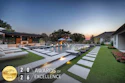
Black Diamond by Edilfare Piscine in Franciacorta: Clean, modern lines and the grounding form of a rectangle underline the nature and rock below it.
The client's brief was clear: a pool perfectly integrated with the home, capable of being experienced visually and functionally as a part of the living area.
The biomorphic shape of this pool in Sicily reflects the forms of natural lakes. The pool and its surroundings become one.
2. Material Honesty: Artisanship, Longevity & Material compatibility
When making sustainable material choices for decking, there can be tension between the use of natural materials and the need for performance. A good example is the choice of a wood finish for a pool solarium. From a wellness perspective, natural woods such as teak and ipe can be a better choice because of their grounding and sensorial characteristics, which can also resonate culturally within a more decorative and rustic setting. While both wood and composite materials have sustainable characteristics, WPC offers durability, longevity and lower maintenance, with weather resistance as a priority. Its slip resistance and durability also make it a good choice for pool solarium areas. The composite can be made with recycled materials which ensures long-lasting durability, helping to reduce waste. FSC-certified wood remains a sustainable option, as long as it comes from responsibly managed forests. It's important to check the origin and environmental certifications of the material you choose.
Meanwhile, local stone for pool borders and the solarium is an excellent example of material harmony with the surroundings. Natural stone has both a wellness and sustainable characteristic, as well as longevity. Of course, the right choice is an informed design decision based on the client's values and context.
Natural wood decking was the right material choice for this biopool, (Bluebase biofilter) by Milla Pool.
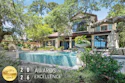
Sustainable and durable: Material honesty through the use of local stone, naturally integrated into the landscape.
3. The Five Senses as Design Tools
We are affected by our senses, and our senses come more alive when connected to the elements of nature: water, earth, air, ether and fire.
A waterscape speaks to wellness when its environment includes a connection to the five senses:
Sight — the first and most dominant impression: Chromotherapy is a prominent tool for creating a visual sensory experience.
Smell — aromatherapy through botanicals, materials and water; how scent can trigger a sense of oneness with nature.
Touch — texture underfoot and at hand; temperature contrast between water, stone and air.
Sound — Sound-healing frequencies are specific tones, measured in hertz, believed by some to resonate with the body’s energy centers and promote healing. Among the most popular are the nine solfeggio frequencies, including 528 Hz, often associated with DNA repair, and 432 Hz, sometimes described as the natural frequency of the universe. Acoustic design can also be incorporated into the pool environment through waterfalls and wind, through the use of chimes.
Taste — hydration rituals, herbal infusions, and mineral water as part of the wellness journey.
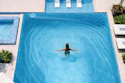
Diving into the sixth sense: The Plaza Sensory Pool is the first swimming pool in Europe to offer an innovative way of experiencing the spa, creating a unique emotional dimension through immersive media, neuroscience, aromatherapy, geothermal hydromassage pools and chromotherapy.
4. The Effect of Oneness: Integrating Water, Garden, and Architecture
Go beyond the pool or vessel itself: True harmony comes from reading the land, the garden and the architecture of the home as a single composition. The waterscape should feel as though it was always there — an extension of the territory, not an addition to it.
Example: A composition where historic architecture, a spontaneous Mediterranean garden and a modern pool live together in balance, all resolved through an understanding of materials and perspective.
The pool takes on a natural form and becomes a mirror of the lake. The stone border of the pool gives natural nuances that mimic the surrounding landscape.
The relationship between pavement and architecture: the spatial relationship between the solarium and conservatory: the pool house/summer kitchen functions as a bridge between living space and water recreation. The garden becomes an extension of the historical palazzo: classical pavement and vases engage in dialogue with traditional plants and essences found in noble palaces of the last century.
5. Designing for the Individual: Beyond the Cookie-Cutter
Consider the client's design taste: Modern, simple designs evoke clarity, simplicity and breathing space, while traditional settings bring warmth, depth and symbolism. Either style can easily pair with natural surroundings, and the two can even be combined. To make a waterscape more personal, consider asking the client whether they would like to incorporate their own personal aesthetic or story into the setting. Avoid cookie-cutter design solutions and add personal touches that represent a memorable trip, hobby or art style — let the waterscape tell a story.
The example below shows how modern, minimalist settings evoke clarity, breathing space and intentional simplicity. Key components in connecting contemporary design with nature are infinity edges, cascading overflows that merge with the surrounding landscape. Modern design can be incorporated in historic and traditional architectural contexts.
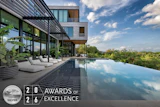
Contemporary lines in a natural setting: Italian Pool Award Residential 2024, by Indalo Pool.
6. Material Dialogue: Where History Meets Now
Celebrate the pairing of clean, contemporary materials — stainless steel, glass and concrete — with timeless materials such as terracotta, mosaic and natural stone. Show how this dialogue creates spaces that feel both fresh and deeply rooted, where comfort meets lightness and history meets the present moment.
Milan, Piazza Medaglie d'Oro: Antique walls and remains are immersed within the pool. Structural glass reveals the historic walls, while underwater seating and stainless-steel reclining beds complete the setting.
An indoor pool incorporated into a castle in Asti. Modern geometry meets antiquity, with historic arches mixed with stainless-steel accessories.
Conclusion: A Checklist as a Creative Act
These six principles are not a formula — they are an invitation to slow down, to listen to the land before reaching for the sketchpad and to ask what a space wants to become rather than what we want to impose upon it.
A waterscape, at its best, is not a product. It is a relationship — between water and stone, between history and the present moment, and between the designer's vision and the client's deepest sense of home. When that relationship is built on intention, material honesty and reverence for the senses, the result is something that cannot be reduced to a trend or a portfolio image. It becomes a place people return to — not just physically, but in memory, in feeling and in the quiet restoration that only truly soulful spaces can offer.
I offer this framework not as a set of rules, but as a creative act in itself: a way to ask better questions, make more conscious choices and ultimately design spaces that nourish the people who inhabit them. The water is waiting. Let's give it somewhere worthy to be.
Meet the Author in Person
The growing wellness movement is influencing consumer expectations and creating new opportunities for pool professionals. At the 2026 MasterMind Summit, designer Maria Moscato will explore how those trends can be translated into practical design decisions that support both healthier aquatic spaces and business growth.
“Designing for Health, Building for Growth: The Wellness Shift in the Pool Industry” will take place September 18 from 12:45 to 1:45 p.m. in Litchfield Park, Ariz. The session is sponsored by Women of Water.
Moscato, GENESIS International Design & Wellness Faculty Advisor with Mia Luna Design, will discuss how wellness is shaping pool design and construction across the residential, commercial and hospitality sectors. Attendees will learn about features and technologies that support health, recovery and relaxation, along with ways to communicate that value to clients.
The seminar will also examine how designing with wellness in mind can help pool professionals differentiate their offerings, increase project scope and position projects for long-term value. Attendees will leave with strategies for aligning wellness-focused design with continued business growth while creating healthier, more meaningful aquatic environments.
The seminar is one of two Women of Water events taking place during the MasterMind Summit. WOW will also host a walking tour of historic Litchfield Park on September 17 at 7 a.m. The tour will explore the community’s history and its roots as a company town established by the Goodyear Tire and Rubber Company more than 100 years ago.
Women of Water brings together women from across the pool, spa and hot tub industry to connect, learn and lead. Its mission is to empower and advocate for women through community, education and leadership development while creating a stronger network of support and mentorship throughout the industry.













 Maria Moscato, GENESIS International Design & Wellness Faculty Advisor | Mia Luna Design
 Black Diamond by Edilfare Piscine in Franciacorta: Clean, modern lines and the grounding form of a rectangle underline the nature and rock below it.
 The client's brief was clear: a pool perfectly integrated with the home, capable of being experienced visually and functionally as a part of the living area.
 The biomorphic shape of this pool in Sicily reflects the forms of natural lakes. The pool and its surroundings become one.
 Natural wood decking was the right material choice for this biopool, (Bluebase biofilter) by Milla Pool.
 Sustainable and durable: Material honesty through the use of local stone, naturally integrated into the landscape.
 Diving into the sixth sense: The Plaza Sensory Pool is the first swimming pool in Europe to offer an innovative way of experiencing the spa, creating a unique emotional dimension through immersive media, neuroscience, aromatherapy, geothermal hydromassage pools and chromotherapy.
 The pool takes on a natural form and becomes a mirror of the lake. The stone border of the pool gives natural nuances that mimic the surrounding landscape.
 The relationship between pavement and architecture: the spatial relationship between the solarium and conservatory: the pool house/summer kitchen functions as a bridge between living space and water recreation. The garden becomes an extension of the historical palazzo: classical pavement and vases engage in dialogue with traditional plants and essences found in noble palaces of the last century.
 Contemporary lines in a natural setting: Italian Pool Award Residential 2024, by Indalo Pool.
 Milan, Piazza Medaglie d'Oro: Antique walls and remains are immersed within the pool. Structural glass reveals the historic walls, while underwater seating and stainless-steel reclining beds complete the setting.
 An indoor pool incorporated into a castle in Asti. Modern geometry meets antiquity, with historic arches mixed with stainless-steel accessories.