







For most pool and spa retailers, the business calendar is a heartbeat: a frantic pulse of activity from April to November, followed by a long, quiet winter hibernation. We’ve accepted this seasonality as a law of nature. We focus on “selling hot water” to bridge the gap, but even the most successful hot tub dealers hit a revenue plateau when the deep freeze sets in or the midsummer heatwaves drive people away from the tubs.
It’s time to stop looking at your showroom as a seasonal shop and start seeing it as a year-round wellness destination.
The missing piece isn’t another SKU of chemicals or a different line of patio furniture. It is the sauna. When integrated correctly, the sauna doesn’t just “fill a gap,” it transforms your business from a seasonal service provider into a high-margin, 12-month authority on the thermal experience.
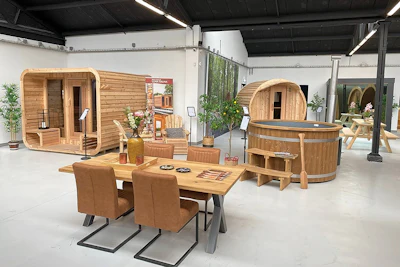
 Displaying multiple sauna models in a dedicated wellness zone signals commitment and helps customers better visualize the full thermal experience.
THE SEASONAL INVERSION: TRADING THE “TRICKLE” FOR A “STREAM”
The pool industry is tethered to the sun; the sauna industry thrives in the dark. As the outdoor living momentum of summer begins to wane, the demand for immediate, intense warmth skyrockets. By adding saunas to your floor, you are effectively inverting the slow season. While hot tub sales may plateau in the deepest winter months, the sauna steps up. It is the ultimate cold-weather product. However, the savvy retailer knows the “Fire and Ice” narrative works both ways:
• In Winter: You sell the fire (the sauna) as a sanctuary from the cold.
• In Summer: You sell the fire to complete the “ice” (the pool or cold plunge).
This is about moving from selling “units” to owning the thermal cycle. If your customer already has a pool, they have the “cold.” Your job is to provide the heat to complete the ritual.
FROM “PRODUCT VENDOR” TO “WELLNESS CONSULTANT”
The biggest mistake a retailer can make is treating a sauna like a “wooden box with a heater.” If you sell lumber, you compete with big-box retailers on price. If you sell the Finnish ritual, you compete on authority, and that is where the margin lives.
To win, your sales team needs to master two specific concepts that elevate the conversation:
1. The Vascular Pump: This is the tangible health payoff. Explain how the heat expands blood vessels and the cold contracts them, acting as a “pump” for the circulatory system. You aren’t selling a bench; you’re selling a measurable sense of profound well-being.
2. Löyly: If your team knows this word (the spirit of the steam created by pouring water on hot stones), they immediately differentiate themselves from the amateur. Using authentic terminology establishes your store as the expert design and build resource.

THE SHOWROOM “TEST DRIVE”: SELLING THE SENSES
We know experiential marketing works; it’s why we have fill-and-flip displays for hot tubs. But you can’t “wet test” a sauna in a showroom. Instead, you must master the Sensory Dry Test.
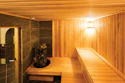
• Don’t Sell a Cold Box: Pre-heat your display models. When a customer steps inside, the wood should be warm to the touch, and the smell of cedar or thermally treated wood should be present.
• The Two to Three Model Rule: One sauna in a corner looks like an afterthought. Three models in a dedicated “Wellness Zone” looks like a commitment.
• Stage the Ritual: Place a bucket, a ladle, and a robe nearby. Your sales script should guide the customer to sit on the bench and visualize the steam. Move from “feature-selling” (6kW heater) to “value-selling” (this heater’s stone capacity creates a wave of steam that unlocks better sleep).
THE BOTTOM LINE: LOW COMPLEXITY, HIGH MARGIN
Beyond the floor traffic, the sauna is a logistical dream for the retailer. Compared to the complexity of a pool build or the mechanical service requirements of a hot tub, a pre-fab sauna is remarkably simple.
• Installation: Usually requires basic electrical and a level base.
• Service: Minimal moving parts means fewer “warranty headaches” and service calls.
• The Upsell: When a customer is already spending $50,000 to $100,000 on a backyard, a $15,000 sauna is a natural, high-margin addition that completes their oasis.
THE NEXT HORIZON
The path to eliminating your winter revenue plateau is already sitting in your showroom, or it should be. You already own the customer; they already trust you with their relaxation. By embracing the sauna, you aren’t just adding a product; you are ensuring your financial longevity by providing the “Fire” to their “Ice.”
Stop waiting for the spring thaw. It’s time to fire up the heater.
This article first appeared in the April 2026 issue of AQUA Magazine — the top resource for retailers, builders and service pros in the pool and spa industry. Subscriptions to the print magazine are free to all industry professionals. Click here to subscribe.