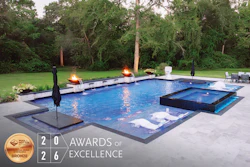














There are two basic ways to put a spa in the backyard. You can buy one at a store and have it delivered, or you can hire a contractor to build one. That obvious and simple distinction has produced two remarkably different categories of products: the portable hot tub/spa and the inground concrete spa, usually attached to a swimming pool.
Both have become highly sophisticated, providing excellent hydrotherapy, aesthetics and consumer experience, and both have their limitations. At the most basic level, when comparing a contemporary portable hot tub with an attached concrete spa, there are two very different approaches to achieving the same objective: creating a place where people can sit in hot water, relax, socialize, and feel better, physically and emotionally.
From the simplest redwood hot tub to the most sophisticated spa in a modern wellness center, the essentials remain the same: heat, motion, and bubbles. When comparing portable and built-in options, the key question is which best suits the homeowner, property and intended use.
The Portable Advantage
The modern portable hot tub is an impressive piece of manufactured technology — or, more accurately, an amalgam of technologies — encompassing hydraulics, electricity, automation, heating and chemical treatment.
Perhaps its greatest advantage is the combination of comfort and hydrotherapy made possible by the keen ingenuity that goes into portable designs. Because a portable spa is manufactured as a complete product, manufacturers can engineer seating, jet locations, water flow and ergonomics with extraordinary precision. The result is an almost endless range of configurations made with almost seamless reliability and variety. From feet to neck, there are hydrotherapy jet arrays designed for maximum comfort and therapeutic benefits.
The seating has also become highly sophisticated. Deep seats, captain chairs, loungers and specialized hydrotherapy positions allow manufacturers to create different experiences within the same vessel. A family can have several people using the spa at the same time, each sitting in a different position and receiving a different combination of water and air therapy.
That level of variety and precision is difficult to duplicate in a concrete spa built on site.
Today's units also can incorporate sophisticated control systems, lighting, sound, misting and even fragrance features. The spa has become something of a personal wellness and entertainment appliance.
The choices in exterior appearance have also expanded dramatically. Portable spas are available in a wide array of cabinet colors and finishes, shell colors and materials. They are no longer necessarily the large, brown boxes many people remember from decades ago.
They can also be incorporated into the architecture of an outdoor space. A portable can be placed inside a gazebo, beneath a roof structure or within a purpose-designed enclosure. When thoughtfully integrated, the unit can become a legitimate component of the landscape rather than something that simply happens to be sitting on the patio.
Instant Gratification
Another enormous advantage is speed. A portable spa is manufactured in a factory, delivered to the property, and connected to its electrical and other required services. Depending on the circumstances, a homeowner can go from a space to usable hot water in a matter of days, and sometimes much faster.
An inground concrete spa is a construction project. It requires design, excavation, plumbing, steel, concrete, waterproofing or finishing, equipment, and all the other components associated with building a permanent swimming pool structure.
That can take weeks or months. For someone who wants hydrotherapy now rather than after a major backyard construction project, the portable has a compelling advantage.
The fact that the entire system is self-contained is another important benefit. The equipment, circulation system, filtration, heating, and controls are integrated into the unit. There is no need to engineer the spa into a pool's hydraulic system or create a separate equipment arrangement.
For many homeowners, that simplicity is a major selling point.
 The complex, precise and repeatable shape of the portable spa shell is a distinct advantage over the custom spa.Photo courtesy True Pixel Art
The Portable Trade-Off
But portability is also the portable spa's greatest weakness. It is temporary by nature. Even if it remains in the same location for 10 or 15 years, it is still an appliance that can be removed.
That isn't necessarily bad. In fact, for a renter or homeowner who doesn't want to commit to a permanent installation, it's a tremendous benefit. But from an architectural standpoint, there is a difference between placing something in the backyard and building something into the backyard.
A portable spa can look awkward when it is simply dropped onto a patio or deck. Its proportions and cabinet construction don't necessarily relate to the architecture of the house or the geometry of the landscape. And while today's portable spas are far more attractive than their predecessors, they remain manufactured objects.
They generally don't add the same architectural or real-estate value to a property that a thoughtfully designed swimming pool and attached spa can provide. That is one of the fundamental trade-offs. The portable spa is a product. The concrete spa is part of the property.
A Spa is Born
The history of the attached concrete spa is essentially the history of pool builders figuring out how to turn a swimming pool into a therapy pool. In the early days of the industry, the two concepts were separate.
At first, way back in the 60s, there was no established practice of adapting a spa into the pool shell. That changed with innovative builders who began working with manufacturers to figure out how to do it. The spa and pool could use the same equipment, with a series of gate valves used to redirect the circulation between the two bodies of water.
It was the beginning of what would eventually become the standard pool-and-spa combination. Builders were trying different materials, hydraulic configurations and methods of heating and circulating water. By the middle of the 1970s, putting a gunite spa into a gunite pool was becoming much more commonplace.
Early attached spas were often built at the same elevation as the pool, with a relatively thin dam wall separating the two. Builders quickly realized that wasn't necessarily the best approach.
If you wanted jets all the way around the spa, you needed a substantially thicker wall to accommodate the plumbing. Builders quickly learned that a 12-inch wall with double curtains of reinforcing steel provided the space needed to conceal plumbing within the dam wall and create proper jet installations.
The lesson was simple — a spa is not just a little swimming pool. It has its own hydraulic and thermal requirements — but the application was complex.
Concrete Becomes Architecture
One of the most important was elevation. Raising a spa approximately 18 inches above the pool created a new vertical design facet and visual centerpiece. The raised spa could be used to create a bench seat and a waterfall feature all in one. It provided both a layered view and a multifaceted experience.
If the spa is positioned just outside the pool, the elevated wall can become a visual and functional transition between the spa and the pool. Intricate spillway design, edge overflows, therapeutic waterfalls, decorative dam-wall design — from naturalistic rock spas with grottos, to clean contemporary vessels to spas built to look like a martini glass, attached spa design has traveled far.
The fundamental advantage of an attached concrete spa is permanence. It is designed specifically for the property and can be shaped around the architecture. It can share the pool's interior finish. It can incorporate tile, stone, coping, and other materials used throughout the landscape. In many settings, it becomes both a visual and functional centerpiece.
And perhaps most importantly, it can create a direct transition between hot and cool water. That warm-to-cool experience is one of the great pleasures of having an attached spa. You can sit in 100-degree water, then step directly into the cooler swimming pool.
The two experiences become part of one watershape.
The Water Quality Question
Another major advantage of an attached spa is its relationship to the pool's circulation and treatment system. When properly designed, the spa can share circulation, filtration, and water treatment with the pool.
That provides a substantial water-quality advantage compared with an isolated vessel that sits unused for periods of time, or is subject to dramatically higher bather-to-water ratios, contributing to treatment and service challenges.
By contrast, the attached spa is part of a larger aquatic system. The water is continuously incorporated into the pool's overall management strategy, rather than existing as a completely separate body of water. Of course, proper hydraulic design and water chemistry remain essential. No spa automatically has superior water quality simply because it is attached to a pool.
But the integration provides significant opportunities for effective circulation, filtration and treatment.
 The attached, custom spa evolved over time, as builders came to realize you needed a substantially thicker wall to accommodate the plumbing, and by raising a spa above the pool, you could create a visual centerpiece, an interior bench seat with a view, and a waterfall feature all in one. Perhaps most importantly, the attached spa creates a direct transition between hot and cool water, a wonderful warm-to-cool experience.Photo courtesy The Owl
Where Concrete Falls Short
The biggest disadvantage of the concrete spa is the same thing that makes it so attractive.
It is built on site. A manufacturer can build a portable spa in a controlled factory environment, using molds, standardized plumbing, repeatable components and highly controlled assembly procedures.
A concrete spa is constructed in the backyard. The design may be customized, but the construction process is dependent on the site conditions, materials, craftsmanship, and field installation. That means a manufactured spa can often provide a higher level of precision in jet placement, seating ergonomics and internal plumbing. On-site fabrication adds more variables and layers of difficulty.
Concrete offers tremendous design freedom, but not necessarily the same level of manufacturing precision and reliability.
And once you've built a concrete spa, it's there. Homeowners can't decide five years later that they'd rather move it to the other side of the yard. The portable can be moved. The concrete spa cannot, at least not without tremendous effort and expense.
Different Kinds of Luxury
The interesting thing about today's spa market is that the traditional distinction between portable and concrete has become less absolute. Portable spas have become more attractive while concrete spas have become more sophisticated.
Portable spas offer excellent hydrotherapy, sophisticated controls, attractive finishes and a remarkable range of amenities. Concrete spas can now incorporate advanced jet systems, automation, lighting, water features, sophisticated hydraulics and highly customized seating. In other words, both sides have learned from the other.
The portable manufacturers have learned that people care about design. Pool builders have learned that people care about hydrotherapy and ergonomics. The result is that consumers today have more choices than ever.
Which Is Better?
For someone who wants a highly engineered hydrotherapy experience, fast installation, extensive jet and seating options, self-contained equipment, and the ability to place the spa almost anywhere, the portable spa is hard to beat.
For someone building a new pool who wants the spa to become a permanent part of the architecture, the attached concrete spa offers possibilities a portable cannot match.
Neither approach is inherently superior. They simply answer different questions.
In both cases, today's homeowners can press a button and have the valves move, the heater fire, the jets operate, the lights illuminate, the music play, and the spa reach temperature while they remain comfortably inside the house, or from a remote location using their smartphone. That's quite an evolution.
But the basic appeal hasn't changed. Whether it comes out of a factory or rises from the ground as part of a custom watershape, a spa/hot tub is ultimately about one simple thing: getting into hot water and feeling better.