








For most consumers who are hot tub shopping, attention naturally gravitates toward the ever-expanding menu of features. They compare jet configurations, seating layouts, lighting packages, sound systems, insulation, controls and aesthetics.
Beyond those vast choices, one of the most important decisions is where the spa will be located.
A hot tub can be a major investment in health, recreation and lifestyle. The right placement elevates the experience, making the spa more comfortable to use, convenient and enjoyable for years to come. Poor placement, on the other hand, can limit use, diminish privacy and create frustrations that gradually erode owner satisfaction.
Experienced dealers, designers and installers understand that location is about far more than finding an empty space in the backyard. Placement should reflect the owner’s goals, the property’s physical characteristics, and how the spa will be used, and how often. Whether the primary purpose is hydrotherapy, socializing, romance, family recreation or wellness routines involving saunas and cold plunges, location dramatically influences the frequency and quality of the user experience.
Starting with Purpose
Before selecting a location, homeowners should ask themselves a simple question: Why are we buying this hot tub? Along with numerous other considerations, the answer often reveals the best placement strategy.
For some owners, the spa serves as a therapeutic retreat. They may use it daily to ease arthritis, reduce muscle soreness, improve circulation or support recovery from exercise. Convenience becomes paramount. Others envision the spa as a social gathering place where friends and family congregate. In those situations, integration with outdoor entertainment spaces becomes a primary consideration.
Some couples see the spa as a private sanctuary designed for relaxation and intimacy. Privacy, ambiance and seclusion become the driving factors. Many families simply want a place to connect, relax and spend time together. Safety, accessibility and visibility from the house may become higher priorities.
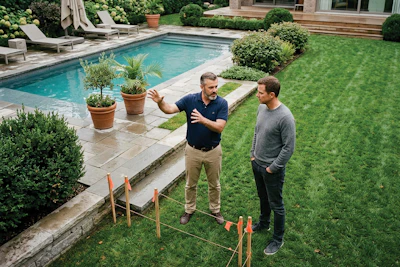
Understanding intended use provides the foundation for every placement decision that follows. "Naturally every client has their own ideas about what they want and how they're going to use their spa," says designer and builder Mike Farley of Farley Pool Designs in Westlake, Texas. "Things like privacy, access, even keeping the cost of installation down might be a priority. I work with clients to identify their priorities and move the project in that direction."
Convenience Drives Usage
One of the strongest predictors of spa/hot tub use is convenience. The easier it is to access the hot tub, the more frequently owners tend to use it, which is why many manufacturers and dealers recommend convenience as the primary location factor.
This consideration becomes especially important in colder climates. A spa located immediately outside a master suite or adjacent to an exterior door may receive dramatically more use than one requiring a lengthy walk through the yard in cold temperatures.
Nearby bathrooms and outdoor showers add another layer of convenience. Users can rinse before entering and comfortably transition between indoor and outdoor spaces. Storage should also be considered. Towels, robes, sandals and maintenance supplies all need accessible locations.
When a spa becomes easy to use, it naturally becomes a more integral part of daily life. That said, locating a hot tub for access and convenience doesn't necessarily mean putting it right outside the master bedroom.
"I'm a bigger fan of creating more of a go-to destination," says Scott Cohen, owner of the The Green Scene Landscaping & Swimming Pools, located in Chatsworth, Calif. "My reasoning for that is, in reality, people don't just go to the hot tub. They need a beverage of some kind, so they're going through the kitchen or the living room. And then, when they're done at the spa, they've got to put a towel away, and they need to put the drinkware away as well. And if socializing is part of the plan, it has to be in a more accessible location."
 The home's walls and exterior fences can carve out a cozy, private space for an exceptional spa installation.

The Privacy Priority
Privacy is another important factor influencing hot tub enjoyment. For many users, few experiences diminish relaxation faster than feeling exposed to neighbors, nearby streets or second-story windows. That's why successful spa placement typically begins with a careful assessment of sight lines both from outside the property and from within it.
According to Farley, exploring privacy is, again, a matter of identifying the clients' priorities and intentions: "Just about everyone is concerned with privacy, but that can mean different things. Some people are looking for complete privacy within the property, while others are concerned with blocking views from neighboring properties."
Existing architectural elements frequently provide excellent privacy opportunities. Homeowners can use the home's walls, garage structures, courtyard configurations and outdoor living spaces to create protected environments. An L-shaped house, for example, often creates natural alcoves that shield a spa from view while providing convenient access.
Fencing remains one of the most common privacy solutions. Decorative privacy fencing can block unwanted views while enhancing the overall design of the landscape. Materials ranging from wood and composite panels to decorative masonry walls can create intimate outdoor rooms specifically tailored for spa use.
Landscaping provides another powerful tool. Strategically placed hedges, ornamental grasses, bamboo screens, shrubs and trees can soften views while creating a more natural setting. Unlike fencing, plantings can establish varying degrees of privacy without making the space feel enclosed.
"Landscaping is my preferred way of creating privacy," Cohen says. "There are numerous types of plants you can use as screens, which oftentimes can extend above a fence. Plantings not only block neighboring views, they are usually the biggest part of creating a beautiful destination within the property, especially when combined with well-thought-out hardscape elements. I don't think you can overstate the importance of plants in creating a great spa setting, but that's true for almost all locations in the landscape."
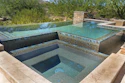
Topography can also become an ally. A spa tucked behind a slope, nestled into a hillside or positioned below grade may naturally gain privacy from surrounding properties. Elevation changes can help conceal the spa while simultaneously creating a sense of retreat.
The goal is not simply to block views but to create a space where users feel comfortable enough to fully relax.
 For the social-minded customer, spa placement is central to plans for backyard gatherings of friends and family.
The Importance of Shade
While soaking under the stars has undeniable appeal, many spa owners spend significant time using their hot tubs during daylight hours. Excessive sun exposure can make extended soaking uncomfortable, particularly in warmer climates.
Providing shade dramatically improves comfort and expands the times of day when the spa remains inviting. Patio covers and pergolas often provide the most seamless solutions because they integrate directly with the home's architecture. Retractable awnings offer flexibility, allowing users to adjust sunlight exposure based on weather and personal preference.
Gazebos remain among the most popular spa enhancements for good reason. They provide shade, weather protection and architectural character while simultaneously addressing privacy concerns.
In some cases, mature trees provide natural shade. Careful consideration should be given to maintenance requirements, however. Trees that shed excessive leaves, flowers or debris can increase cleaning demands and affect water quality. The best shade solutions balance protection from the elements with adequate ventilation and openness.
Creating a Social Hub
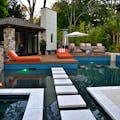
For many homeowners, the hot tub serves as an extension of their entertainment space. When social interaction is the primary objective, proximity becomes critical. A spa positioned adjacent to an outdoor kitchen, bar area, fire pit or lounge space encourages movement and interaction among guests.
Outdoor televisions, integrated audio systems and nearby seating areas further enhance the social experience. Rather than functioning as a separate destination, the spa becomes an active component of a larger outdoor living environment.
In these settings, designers often think of the spa as another seating area within the entertainment landscape. Guests move naturally between dining, conversation, swimming and soaking.
Convenient traffic flow becomes essential. Users should be able to move comfortably between the spa and surrounding amenities without navigating long distances or awkward pathways.
"Hot tubs can be places for the most private activities, and they can be central to social gatherings," Cohen says. "When possible, we combine them with bars, dining and lounging areas, and especially fire features, which not only serve as a great gathering spot, but when people are getting out of the water, they can stay warm by the fire."
Designing Around Views
Some of the most memorable spa experiences are defined by what users see while soaking.
Views can range from dramatic mountain panoramas and ocean vistas to intimate garden compositions designed specifically for contemplation and relaxation.
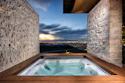
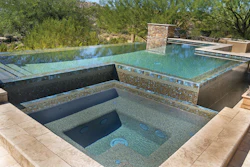
A spa positioned to capture a sunset, overlook a valley or frame a distant ridgeline transforms an ordinary soak into an immersive experience. In these situations, seating orientation becomes particularly important. The best view should be visible from the spa's primary seating positions.
Not every property offers sweeping vistas, but virtually every installation can benefit from thoughtful visual composition. Water features, specimen trees, garden sculptures, landscape lighting and carefully designed planting schemes can create compelling focal points even in relatively small spaces.
Many landscape designers intentionally create "borrowed views," directing attention toward attractive elements while screening less desirable surroundings. The principle remains the same whether overlooking a mountain range or a beautifully planted courtyard: give bathers something beautiful to enjoy.
"It's not that often, but there are clients who want to sit in their spa and enjoy a beautiful view," Cohen says. "For those clients, a short walking distance is not an issue."
Elevated Experiences
Mountain homes, ski lodges and hillside properties often feature hot tubs positioned on elevated decks to capitalize on spectacular views.
These installations can be extraordinarily successful, but they require careful planning. The most critical consideration is structural support. A filled hot tub with occupants can weigh several thousand pounds. (See the sidebar.) Deck structures must be engineered to safely accommodate these loads.
Access for maintenance and service should also be addressed during the planning phase. Pumps, control systems and plumbing components require periodic access. A beautiful installation quickly becomes problematic if technicians cannot reach critical equipment.
Utility connections, drainage and cover operation should likewise be evaluated before construction begins. When properly designed, elevated spa installations can create some of the most dramatic and memorable soaking environments imaginable.
 Many landscape designers intentionally create "borrowed views," directing attention of bathers toward attractive elements such as this beautiful courtyard with its delightful water feature.
The Rise of Wellness Zones
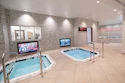
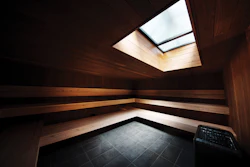
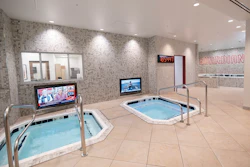
A growing number of homeowners are incorporating hot tubs into larger wellness environments. The increasing popularity of contrast therapy has fueled demand for installations that combine hot water immersion, saunas and cold plunges within a unified space.
"There's no question that creating wellness areas has become more and more popular among homeowners," Farley says. "The hot tub is an important part, but it's right there with saunas, cold plunges, weights and other exercise equipment, and swim spas. And, it can mean you're locating it indoors."
In these settings, internal proximity becomes especially important. Users often move repeatedly between hot and cold environments, making efficient circulation essential. The spaces support recovery, fitness, stress reduction and overall well-being while creating a resort-like atmosphere at home.
Making the Most of the Investment
Ultimately, hot tub placement is about maximizing value. The right location increases comfort, convenience and enjoyment. It encourages more frequent use and helps ensure the spa fulfills its intended purpose.
A spa designed for hydrotherapy should be easy to access. A spa designed for entertaining should connect naturally to social spaces. A spa intended for romance should provide privacy and ambiance. A family spa should support safety, convenience and togetherness.
Every property presents unique opportunities and challenges. The most successful installations emerge when homeowners, dealers, designers and contractors work together to evaluate privacy, shade, views, circulation, utilities and intended use before finalizing the location.
Consumers often focus heavily on selecting the perfect hot tub. Equally important is selecting the perfect place for it. Because when it comes to long-term satisfaction, location may not be everything, but it comes remarkably close.
REFERENCES
- https://www.hotspring.com/faq/what-are-hot-tub-installation-requirements
- https://www.youtube.com/watch?v=mAbqhIaOHTU
- https://casablui.com/blogs/news/hot-tub-installation-requirements
- https://epichottubs.com/blog/how-much-does-a-hot-tub-weigh/
- https://www.liquidleisure.ca/rentals/faq/
- https://funoutdoorliving.com/construction/wooden-deck-with-hot-tub/
- https://funoutdoorliving.com/installation/hot-tub-installation-requirements/
- https://pleasurepoolsandspas.com/learn/what-are-hot-tub-installation-requirements/
- https://phoenix.swimspas.us/wp-content/uploads/2022/06/H2X-Backyard-Planning-Guide.pdf
- https://www.aquavisionpool.com/hot-tub-foundation-guide/
- https://pdcspas.com/blog/whats-the-best-base-for-your-hot-tub
- https://www.justanswer.com/electrical/p5bm9-bought-intex-inflatable-hot-tub-supposed.html
- https://www.jacuzzi.com/en-us/Guide-to-Installing-a-Hot-Tub.html