













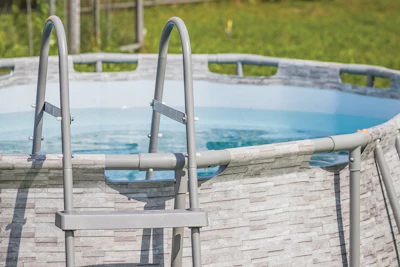
“The above ground pool market is very substantial,” according to Eric Steinmeyer, CEO of Polygroup North America. “There have been millions of aboveground pools sold across the industry over the past 20 years. While it’s not like an inground pool that’s permanent, it’s still a substantial volume being sold every year.”
Because of its market share within the broader residential pool industry, aboveground pool manufacturers and key accessory partners have come together to form the Pool & Hot Tub Alliance (PHTA) Aboveground Pool Coalition, a “unified, non-competitive forum where we can work collaboratively on consumer safety and education,” explains Pat Fumagalli, chairman and CSO of Bestway USA Inc. “We recognized that meaningful progress requires collective action, shared safety data, and consistent messaging.”
The Coalition began forming in Fall 2025, as aboveground pool manufacturers noticed that “a lot of the historical safety initiatives that had been put forth were more focused on inground pools,” says Steinmeyer. “We reached out to PHTA to get the association, and the industry as a whole, on board with applying additional focus to aboveground pools.”
GOALS FOR 2026 AND BEYOND
In this short time, the Coalition has already identified four key goals for 2026. The first is to establish reliable aggregate industry data. “We’re working with PHTA and other partners to collect anonymized, aggregated data that reflects the real size of the aboveground pool market and helps correlate market presence with incident trends — not sales intelligence,” Fumagalli explains. “This data will be used to better inform regulators, strengthen standards, and focus resources.”
The second is to expand Coalition membership. Current members include representatives from some of the world’s largest manufacturers, including Intex Recreation Corp., Latham Pool, Polygroup, and Bestway. “We’re actively recruiting more soft-sided and hardsided manufacturers,” says Fumagalli, “and also reaching out to ladder manufacturers and other critical safetyrelated suppliers.” By having more voices in the room, the more comprehensive future data and resources can be.
The third goal is to support standards development and regulatory alignment. “Coalition members actively participate in PHTA and ASTM safety standards development,” explains Fumagalli. “The Coalition’s collaborative input ensures that standards remain effective and achievable."
Lastly, but perhaps most importantly, the Coalition’s fourth goal is to launch a coordinated consumer safety education campaign. “Across our meetings, we’ve consistently emphasized that safety issues in the aboveground pool category transcend brands and business interests,” Fumagalli says.
CONSUMER EDUCATION AND AWARENESS
Like any body of water, aboveground pools require awareness, responsibility, and layers of protection to be enjoyed safely.
“While aboveground pools have built-in safety features — for example, unlike inground pools, you can’t just fall in — there are still a lot of things users have to keep in mind that might not be obvious to them,” Steinmeyer says. “The industry is continuing to take on the responsibility to educate people on how these products should be used and what the risks are.”
Aboveground pool manufacturers are actively working to enhance consumer safety information that is clear, accessible, and evolving to meet consumers where they are — including online videos, QR-linked guides and manuals, and mobile-friendly content.
Fumagalli highlights four key safety guidelines for aboveground pools: encouraging layers of protection, leveraging technology for safety education, enhancing industry standards, and promoting industry-wide crisis and communication readiness. Layers of protection include fences and gates, proper ladder storage, cleared perimeters, and vigilant supervision. Education involves the creation of digital content, like microsites, videos, and interactive checklists. The Coalition is actively supporting the work of PHTA and ASTM regarding industry safety requirements and consistent adoption of standards and codes. Manufacturers are proactively preparing information to clarify regulatory confusion and maintain consumer trust.
WHY ABOVEGROUND POOLS?
“For consumers, one of the big advantages of aboveground pools is their affordability,” Steinmeyer explains. “They offer an option for people who otherwise wouldn’t be able to afford an inground pool, or don’t have access to an inground pool. Our products retail from $100 to $700, and there are larger and more permanent aboveground pools — such as steel wall pools — that are still only a few thousand dollars. That’s obviously much more affordable for a broader base of people.”
For the pool industry as a whole, aboveground pools are a “key asset,” according to Fumagalli. “Sometimes there is a misconception that aboveground pools compete with inground pools, but that isn’t the case. We often see that after a consumer purchases an aboveground pool and has enjoyed having a pool in their backyard, they transition to an inground pool.”
Aboveground pool maintenance is also an important but often untapped segment for retailers, Steinmeyer says. “Just like with an inground pool, there is a whole additional incremental revenue with maintenance — chemicals, cleaning kits, supplies. There are additional add-on sales opportunities that retailers may not be aware of.”
Steinmeyer notes that people — consumers as well as those in other industry segments — often think of aboveground pools as a toy or a throwaway product, but that really is not the case. “Aboveground pools are made to last multiple years, and they require work and cleaning,” he explains.
Steinmeyer emphasizes that aboveground pools should be seen as “complementary to other industry players.”
GETTING INVOLVED
When asked why he joined the PHTA Aboveground Pool Coalition, Steinmeyer says, “It’s about making sure that people understand these products. I think they’re great. I’ve used them personally and given them to family and friends. But I would really like people to think about them as they think about inground pools — both the enjoyment they present, as well as the safety considerations needed.”
“I joined the PHTA Aboveground Pool Coalition because safety cannot be treated as competitive territory,” Fumagalli explains. “By aligning manufacturers and other key partners, we can raise the entire industry’s safety posture, leverage data through transparency, make safety standards even stronger, and give consumers and retailers resources that reduce risk in the real world.”
As Fumagalli notes, “Collaboration is the only way to achieve meaningful results.”
To learn more about the PHTA Aboveground Pool Coalition and get involved, please contact Justin Wiley, PHTA executive vice president of Advocacy and External Affairs, at [email protected].
This article first appeared in the April 2026 issue of AQUA Magazine — the top resource for retailers, builders and service pros in the pool and spa industry. Subscriptions to the print magazine are free to all industry professionals. Click here to subscribe.