










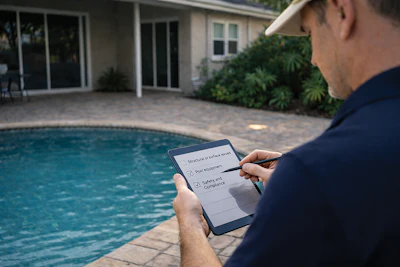
Anyone who's ever bought or sold a house is acquainted with the tension that swirls around the home inspection step.
Having a professional come in and assess a structure for possible concerns before the sale is entirely locked has the chance to scuttle the whole transaction. If you’re a buyer, a dream house can suddenly look like a money pit. If you’re a seller, you might see a deal fall through because of issues you didn’t even know were there.
Now, add in a pool. That’s a whole other major component of a property’s landscape that can make or break an inspection. Too often, it’s also a part of the property that homeowners take for granted when they’re preparing to sell.
A PROBLEMATIC INTRODUCTION
Most sources say a pool can add 5 to 8% to a home’s value. But for that to hold true, the pool can’t raise any red flags during a home inspection.
Dave Mele is the president of Pool Scouts, a national pool service company operating in 17 states. Before he took that role, he was the president of homes.com, one of the leading real estate websites. He knows a thing or two about how home inspections can shift the market, and he says pool and spa companies can help their customers get ahead of potential pitfalls.
As anyone who works on them knows all too well, pools are complicated systems. That inevitably means more to scrutinize during a home inspection — heightening the importance of proper, ongoing care. Mele notes that signs of deferred maintenance are likely to be noticed by an inspector, potentially putting the home sale at risk.
“There are a number of things that if not well-maintained could go wrong,” Mele says. “And then some of the things that could go wrong could be quite expensive. It’s a really interesting dynamic, I think, when you look at a buyer who’s considering buying a home with a pool and they’re a first time pool owner.”
A home buyer is likely to have at least a passing knowledge of home upkeep demands that often require outside professional assistance, such as electrical work and plumbing. If they’ve never had a pool before, the ongoing investment needed to maintain it can be daunting. There’s a real possibility of sticker shock around the cost of ownership.
SALE STOPPERS
Mele identifies three categories of pool issues that could compromise a sale when they come up in a home inspection.
The first category is structural or surface issues. Because these problems can be distinctly visible during an inspection, they are arguably the most likely to emerge. This category includes cracked or deteriorating plaster, pile failures, missing tiles, or cracks in the coping. Mele adds that settlement cracks in concrete decks and pools can be an especially large problem.
“So if there is a resurfacing required, you’re talking about a job that costs into the thousands and maybe over $10,000 from a repair standpoint,” Mele notes. “So the highest concern category then are these structural and surface issues. You really want a good inspection of the pool structure and the pool surface.”
Mele names the pool equipment as the second category. This category includes items such as pumps, heaters, and salt systems. Skilled inspectors are going to look for leaking pumps, filters, or valves. They’ll check to see if any of the equipment has evidence of corrosion or appears to be at the end of its life cycle. They’re also checking to ensure all the equipment is up to code.
“They’ll be looking at the pump, for example,” says Mele. “An older system might have a single-speed pump, but more modern regulations in certain states require variable-speed pumps.”
The third category centers on safety and compliance items. Inspectors could find problems with the electric system: non-GFCI outlets, missing or faulty bonding or grounding, or cracked or broken lights. Because these problems are particularly dangerous, they’ll cause alarm if found and will need to be addressed quickly. Apart from the electric system, safety concerns can stem from fencing and gating, steps, handrails, and drain covers.
In addition to these main categories, there are all sorts of ways in which inadequate ongoing maintenance can show up in an inspection report. Maybe the water is cloudy or green. Maybe there’s stained concrete, calcium scaling, or dirty filters. All of these flaws suggest the pool hasn’t been maintained properly and raise suspicions of larger, more costly problems lurking.
INSPECT EARLY
How can you help a pool client who is thinking about selling their home? Mele says the best advice you can give them is to set up their own inspection well before they plan to put the property on the market.
“The home inspection is always this point of unknown, so what you want to avoid is surprises,” notes Mele. “I think completing the pool inspection early just gives the seller peace of mind and confidence that their asking price is more likely to be achieved, or even exceeded, because they know whether there are any underlying issues.”
For this advance work, homeowners might be inclined to bring in an inspector who is specialized in pools. By drawing on their own deep knowledge, pool and spa companies can develop a lucrative sideline with pool inspections.
“You need to be in a position to deliver this service, which means you need to be trained and qualified to do it,” Mele says.
Mele suggests pool and spa companies set up a system for conducting these inspections and develop customer reports that lay out all the concerns that should be addressed with the pool before moving forward with a sale. The inspection can be recommended to active clients at any point in their general maintenance cycle, just like any other proactive measure.
Even if the customer ultimately decides against selling their home, the inspection can help them catch otherwise unseen flaws before they escalate into major issues.
“You want to be proactive in helping them avoid any high-ticket items that can come from a lack of maintenance,” says Mele. “You definitely want to be that trusted advisor to your customer, helping them understand the maintenance schedules and the replacement timelines so that they can avoid a really high-dollar failure.”
This article first appeared in the April 2026 issue of AQUA Magazine — the top resource for retailers, builders and service pros in the pool and spa industry. Subscriptions to the print magazine are free to all industry professionals. Click here to subscribe.